
Overview: Pericardium Sinew Channel (Arm Jueyin)
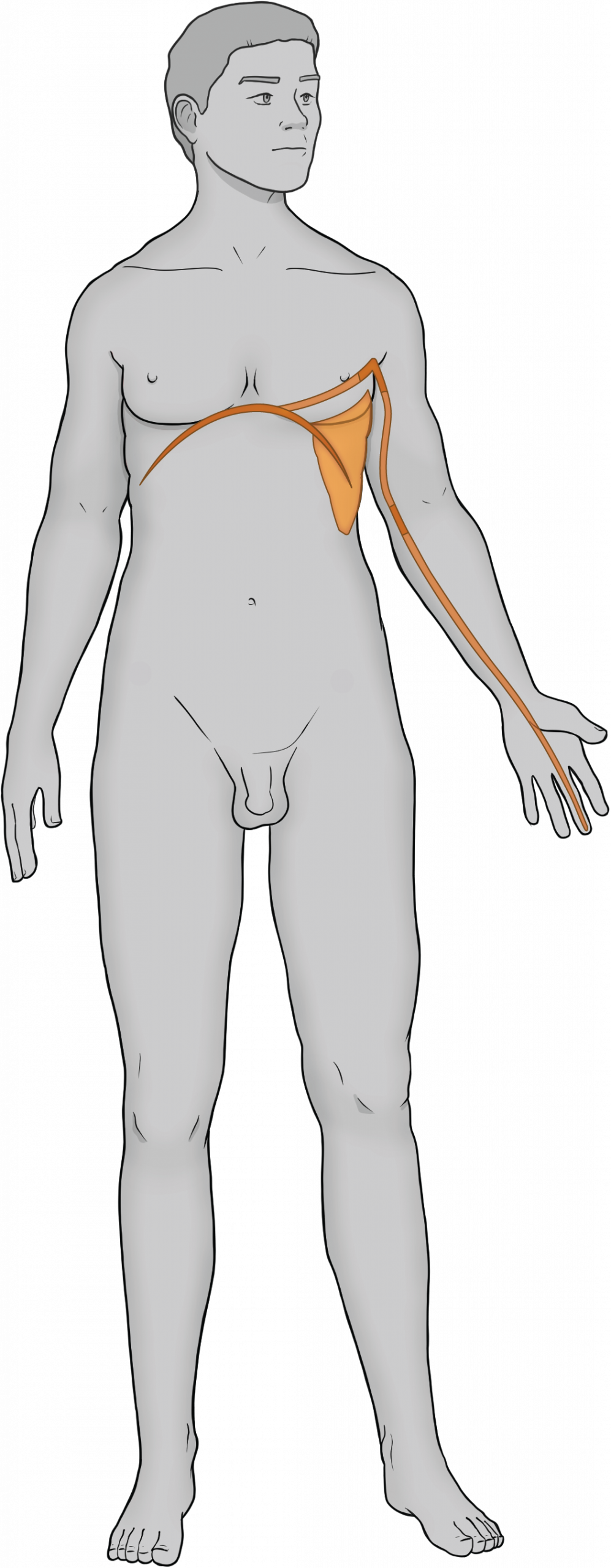
The Pericardium Sinew Channel and associated anatomy
-
- This sinew channel begins at the base of the distal phalanges (insertion of flexor digitorum profundus) and travels cranially up the fingers and across the palm to bind at the wrist. From here, it continues up the flexor surface of the forearm to bind at the medial epicondyle of the elbow. (Anatomy: Flexor digitorum profundus, Flexor digitorum superficialis, Lumbricales, Palmar interossei, Palmar fascia, Palmaris longus, Pronator quadratus, Flexor carpi radialis, Pronator teres)
- The Pericardium sinew channel will then travel up the medial intermuscular septum to the insertion of the teres major, latissimus dorsi, and subscapularis. (Anatomy: Teres major, Serratus anterior, Latissimus dorsi, Subscapularis)
- The sinew channel then divides into three branches:
- The first branch travels with the subscapularis and the teres major to insert on the scapula, then continues with the serratus anterior to wrap around the ribcage.
- The second branch travels with the latissimus dorsi to insert into the thoracolumbar fascia.
- The third branch travels with the Lung sinew channel to penetrate the thoracic cavity.