
4. Triceps Brachii
Origin:
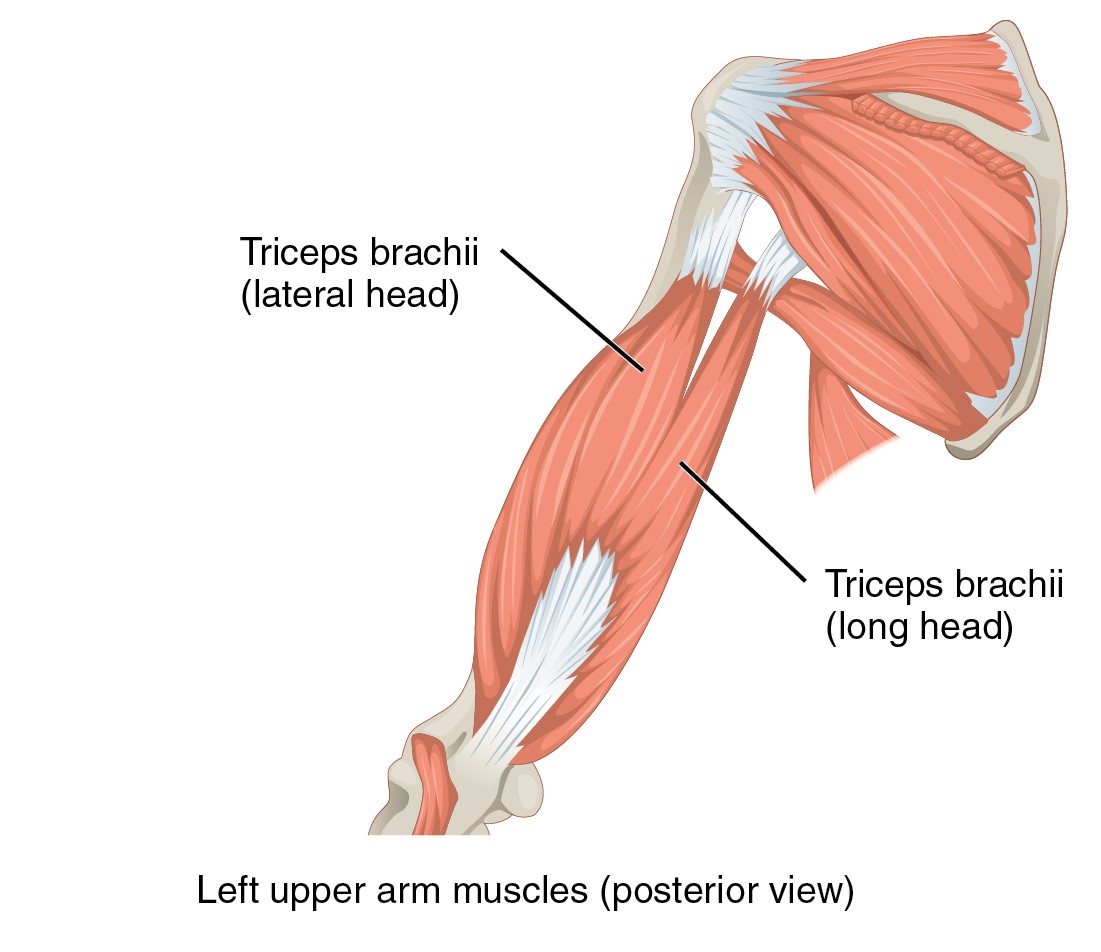
- Long head: Infraglenoid tubercle of the scapula
- Lateral head: Posterior aspect of the humerus just above the radial groove
- Medial head: Posterior aspect of the humerus just below the radial groove
Insertion: Olecranon process of the ulna
Action:
- Extends the forearm
- Extends the humerus
- Long head – assists in adduction of the humerus
Innervation: Radial nerve (C6/7/8) innervates all portions of the triceps
Note: Variation does exist and in some cases, the medial head gets innervation from the ulnar nerve and the long head by the axillary nerve
Needling
Position: Variable – prone, supine, side-lying
Palpation: Hard to miss, just inferior to the deltoid on the posterior aspect of the humerus
Technique: Grasp the muscle and needle medial to lateral (or vice versa) threading through the muscle belly
Caution: Low – caution of the ulna nerve when targeting the medial head of the triceps – caution of the radial nerve between the long and medial head of the triceps
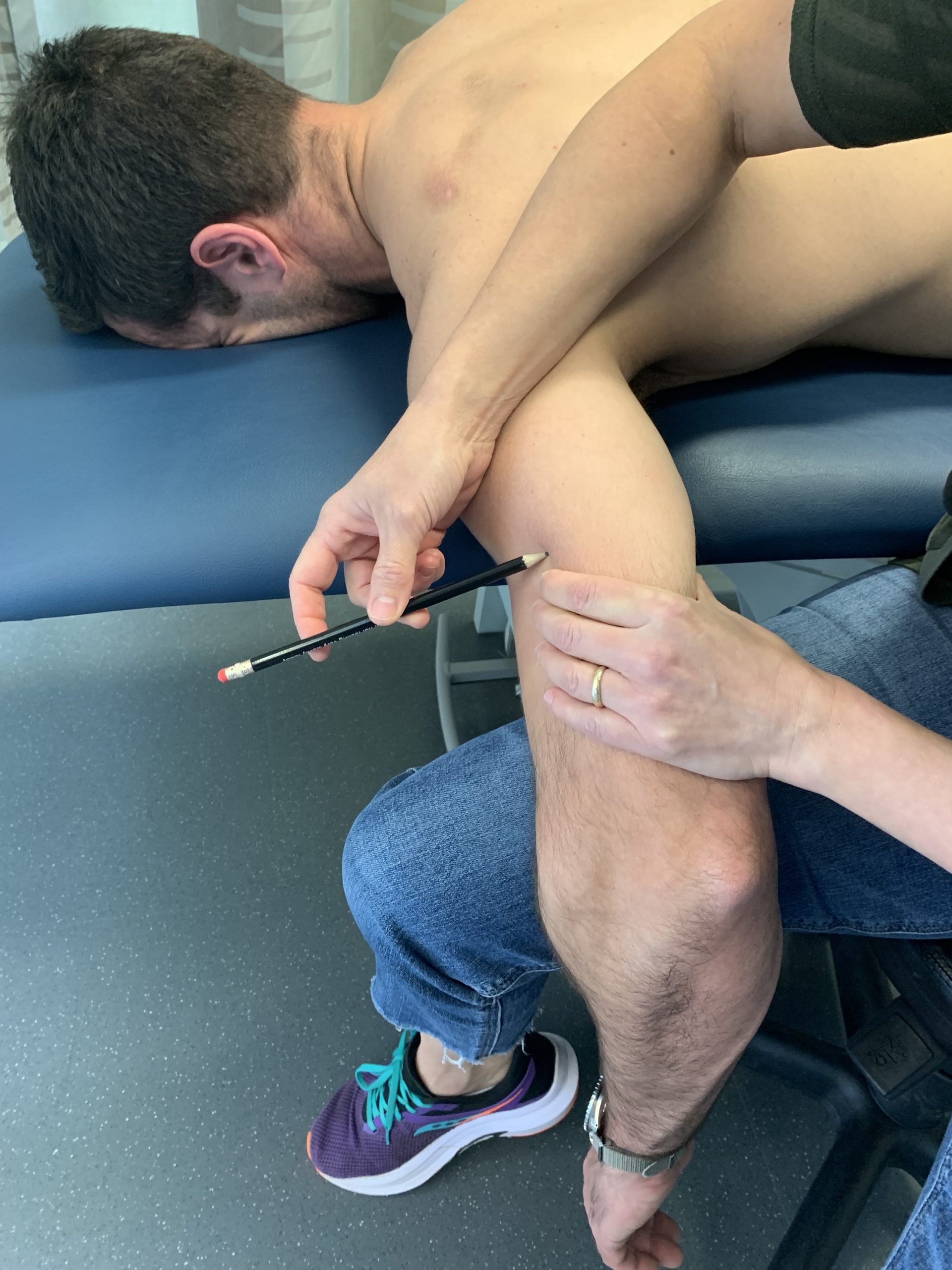
Video 7.4 Needling triceps brachii, original video by Nadine Crocker, CC BY-NC 4.0.