
10. Deep Lateral Rotators
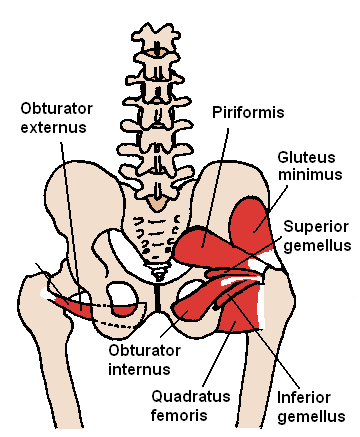
| Muscle | Origin | Insertion | Action | Innervation |
|---|---|---|---|---|
| Superior gemellus | Ischial spine | Medial aspect of the greater trochanter of the femur | Lateral rotation of the leg, Abducts a flexed thigh, and helps stabilizes the hip. | Nerve to obturator internus (L5/S1) |
| Obturator internus | Pelvic surface of obturator membrane and surrounding bone | As above | As above | As above |
| Inferior gemellus | Ischial tuberosity and lower aspect of sciatic notch | As above | As above | Nerve to quadratus femoris (L5/S1) |
Needling
Position: prone or side lying
Palpation: Attempt to palpate these muscles around their insertion onto the greater trochanter of the femur
Technique: Needle at the attachment on the greater trochanter of the femur
Caution: Moderate – Do not needle in the middle 1/3 of these muscles as the sciatic nerve travels directly over these muscles. It is safer to needle along their attachment to the greater trochanter.
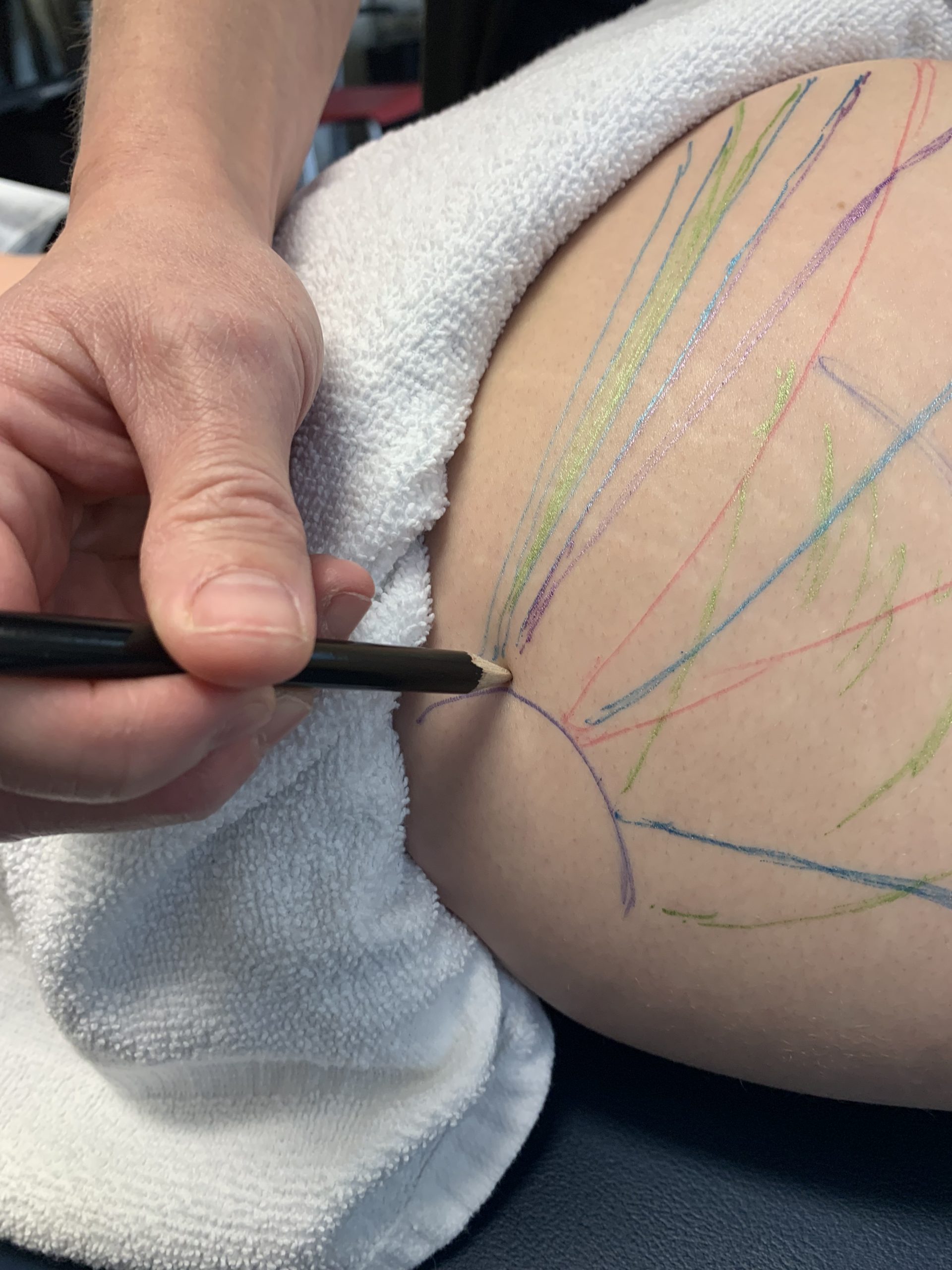
Video 2.10 Needling of deep lateral rotators, original video by Nadine Crocker, CC BY-NC 4.0.