
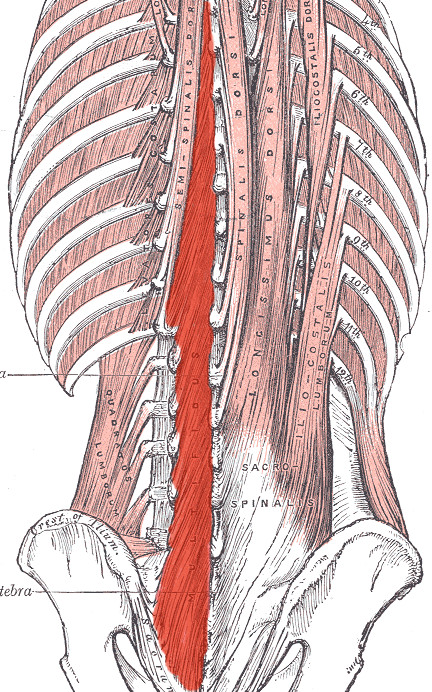
9. Transversospinalis Group
Transversospinalis Group
- Semispinalis
- Multifidus
- Rotatores
*Note: Although we may be needling the entire transversospinalis group at once, we typically only speak of needling the multifidus.
Multifidus
Origin: Posterior sacrum, posterior ilium including the posterior superior iliac spine (PSIS), mamillary process of the lumbar spine (Lsp), TVPs of T1-T3 and articular process of C4-7
Insertion: Fibers pass supero-medially to SPs of the vertebrae above, spanning 2-4 segments
Action:
- Assists with stabilization of the vertebrae
- Assists with extension of the spine segmentally
- May act as organs of proprioception (true for all muscles in this group)
Innervation: Dorsal rami of segmental spinal nerve
| Muscle | Origin | Insertion | Action | Innervation |
|---|---|---|---|---|
| Semispinalis | TVPs of C4-T12 | Fibers run superomedially to occipital bone and SPs of Tsp and Csp spanning 4-6 segments | Extends the head, thoracic and cervical spine and rotates them contralaterally | Dorsal rami of the segmental spinal nerve |
| Rotatores | TVPs of all vertebrae, most robust in the Tsp | Fibers run supero-medially to attach to the junction of lamina and TVP or the SP of the vertebrae above spanning 1-2 segments |
|
Dorsal rami of the segmental spinal nerve |
Needling
Palpation: Palpate within the lamina groove of the vertebrae in the lumbar and sacral regions – Actual palpation of these muscles is only possible in the sacral region and occasionally L4/5 vertebral levels
Technique: Needle perpendicularly posterior to anterior using the lamina as a bony backdrop – Stay within one finger’s breadth of the spinous process
Caution: Moderate-High: depending on which part of the spine – Lamina groove narrows around the thoracic-lumbar junction – Lung field is directly lateral to the lamina groove in the thoracic and upper lumbar spine
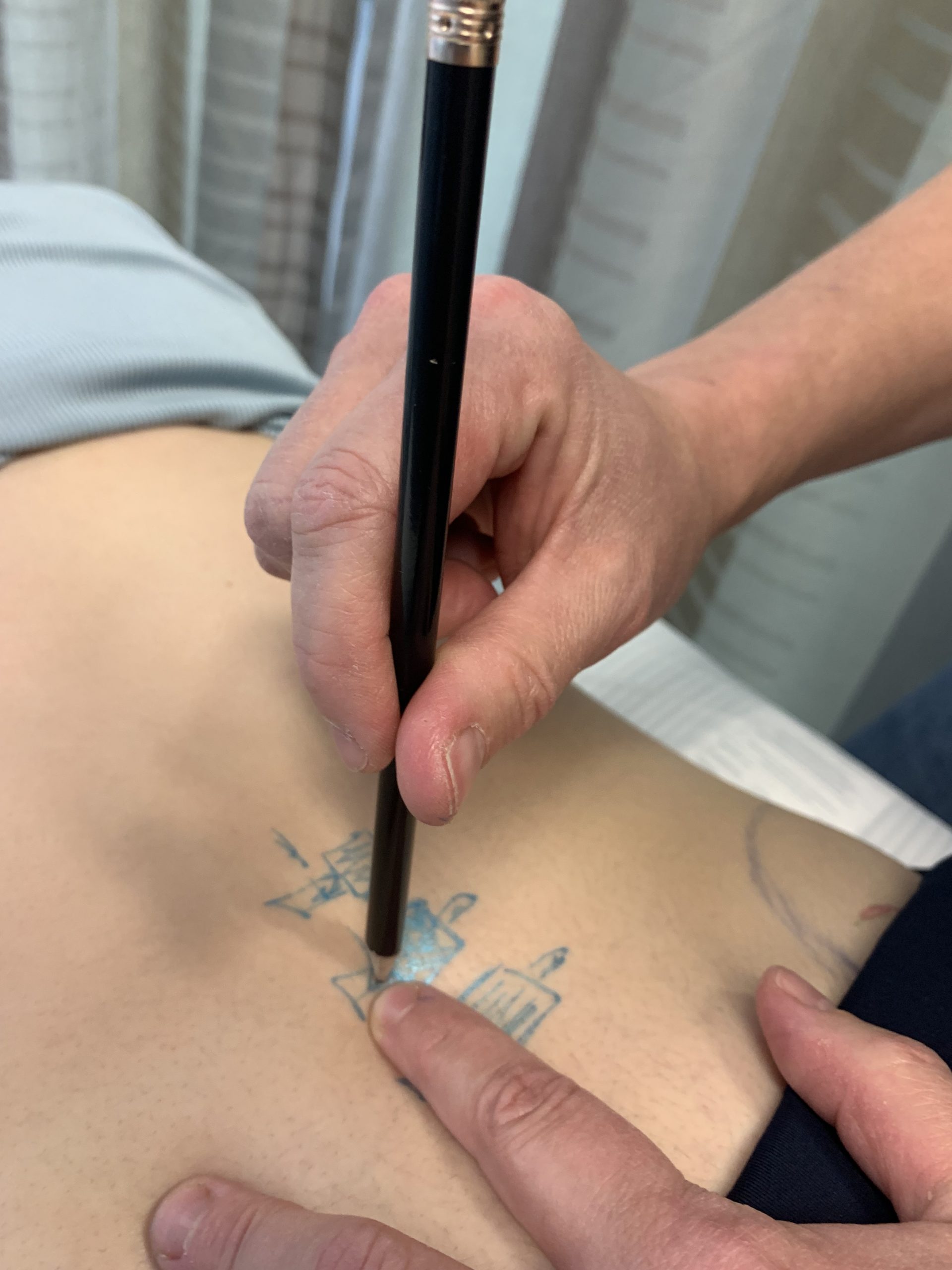
Video 1.14 Needling multifidus, original video by Nadine Crocker, CC BY-NC 4.0.
Interspinalis muscle group: Not needled
- Interspinales: Paired muscles that run between the SPs of each vertebrae, occasionally absent in the thoracic spine – Act as stabilizers and most likely proprioceptors
- Intertransversarii: Paired muscles that run between the TVPs of each vertebrae, occasionally absent in the thoracic spine – Act as stabilizers and most likely proprioceptors
- Levator costarum: Originate on the TVP of C7-T11 and run inferior to attach to the rib directly below it – Assist in elevating the ribs in inspiration