
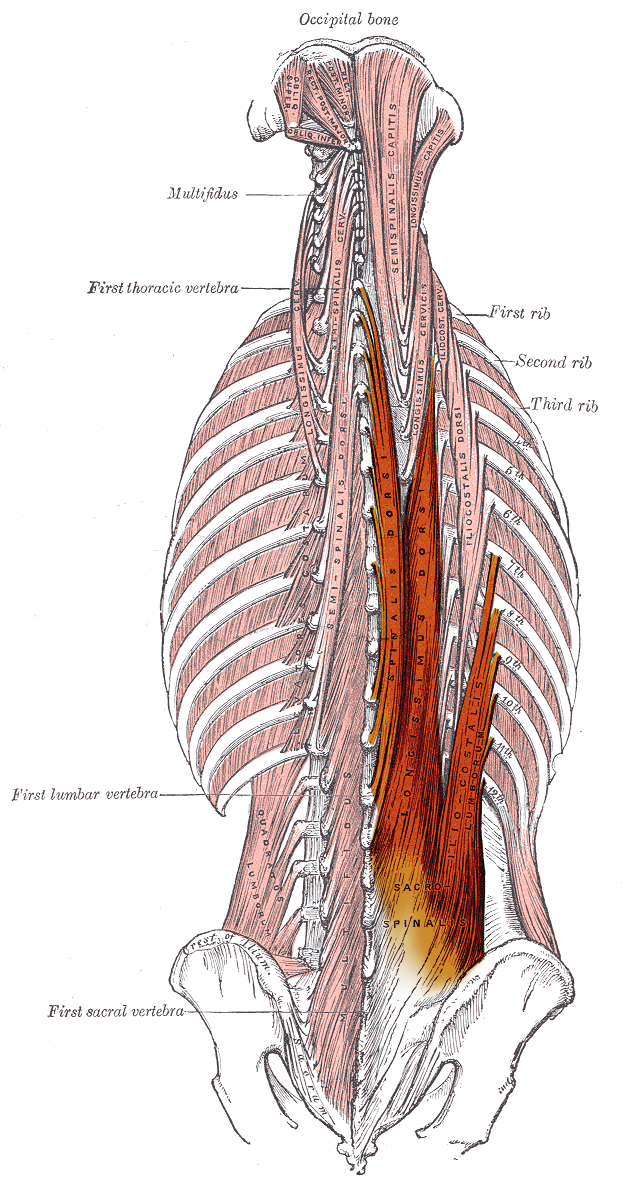
8. Erector Spinalis Group
Erector Spinalis Group
- Iliocostalis
- Longissimus
- Spinalis
Origin:
Common origin – posterior sacrum, iliac crest, sacrotuberous ligament, dorsal sacroiliac ligaments, spinus process (SP) and transverse process (TVP) of T11-L5, supraspinous ligament
- Iliocostalis lumborum: as per common origin
- Iliocostalis thoracis: + angles of ribs 6-12
- Iliocostalis cervicis: + angles of ribs 3-6
- Longissimus thoracis: + TVPs and accessory processes of L1-5 and middle layer of thoracolumbar fascia
- Longissimus cervicis: + TVPs of T1-T5
- Longissimus capitis: + TVPs of T1-T5 and articular process of C4-7
- Spinalis thoracis: + SPs of T11-L2
- Spinalis cervicis (often absent): Inferior part of the nuchal ligament, SPs of C7-T2
- Spinalis capitis (blends with semispinalis capitis): Articular process of C4-C6, TVPs of C7-T6/7
Insertion:
- Iliocostalis: Fibers run superiorly to angles of the lower ribs and TVPs of the cervical spine (Csp)
- Longissimus: Fibers run superiorly to the ribs between the tubercles and angles of the ribs, to the TVPs in the thoracic spine (Tsp) and Csp, and to the mastoid process of the temporal bone
- Spinalis: Fibers run superiorly to the SPs of the upper thoracic spine and to the cranium
Action:
- Bilaterally extends the vertebral column and controls vertebral flexion
- Unilaterally side bends the vertebral column
Innervation: Posterior rami of segmental spinal nerves
Needling
Position: Prone
Palpation: Palpate the erector group just lateral to the spine
Technique:
-
- Make a shelf by pulling the erectors towards the midline and make a bracket with your fingers – Needle between your fingers in a lateral to medial direction staying within the shelf of the erector muscle group
Note: This is safest to needle in the lumbar region – It is possible to needle in this fashion in the thorax on some patients, but it is more difficult and is often not possible
2. Needle directly perpendicular to the spinous process staying withing one finger breath of the spinous process – Use the lamina as a bony backdrop
Caution: Moderate: abdominal content, kidney, and the lung fields are located anterior to these muscles – The lungs extend as far down as L2 with deep inspiration – Do not needle under or completely through this muscle group
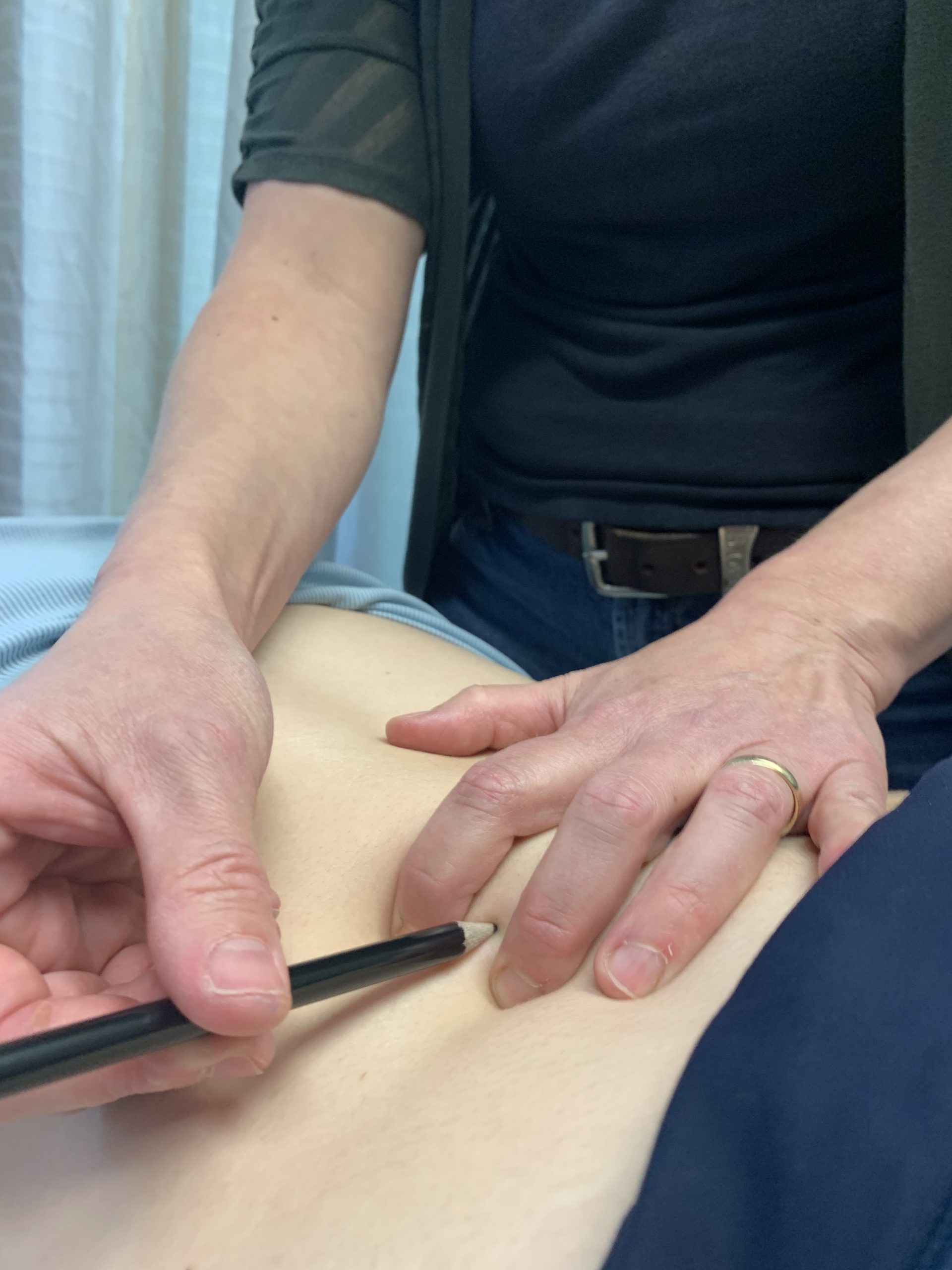
Video 1.10 Transverse needling of lumbar erector spinae, original video by Nadine Crocker, CC BY-NC 4.0.
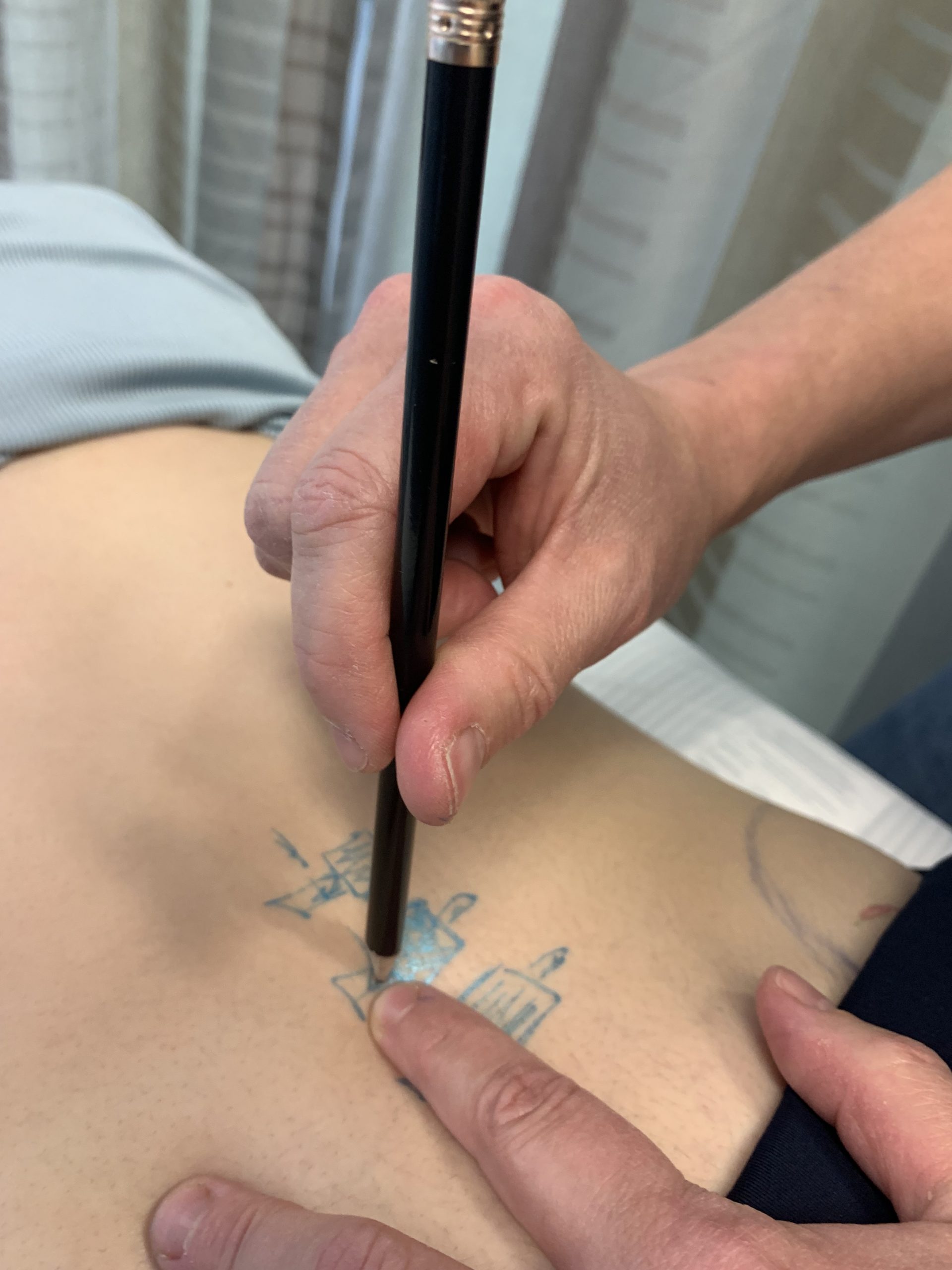
Video 1.11 Perpendicular needling of lumbar erector spinae, original video by Nadine Crocker, CC BY-NC 4.0.
Video 1.12 Perpendicular needling of thoracic spine, original video by Nadine Crocker, CC BY-NC 4.0.
Video 1.13 Perpendicular needling of thoracic spine, original video by Nadine Crocker, CC BY-NC 4.0.