
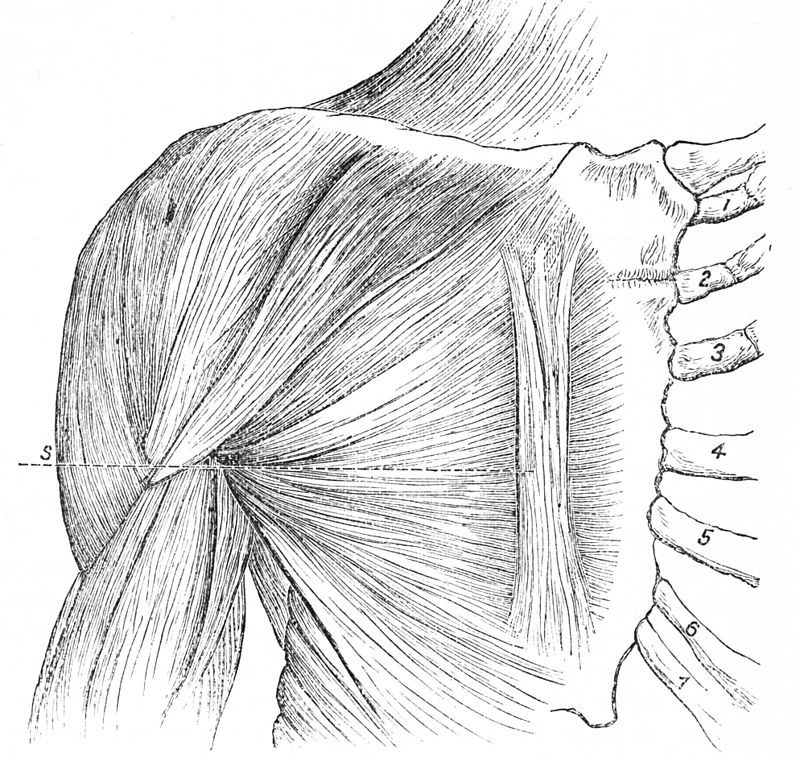
16. Sternalis
Present in approximately 7.8% of the population, more common in females.
Origin: Variable – Manubrium of sternum or clavicle
Insertion: Variable – xiphoid process, costal cartilages, pectoral fascia, lower ribs, and/or rectus sheath
Action: Theorized as…
- A proprioceptive muscle
- Assists in movement of the shoulder joint
- Residual muscle from when we used our upper limb more
Innervation: Variable: dorsal or ventral rami of thoracic nerves, intercostal nerves
Needling
This muscle is not considered with needling. Of note, it is estimated that 5-8% of the population have sternal foramina at the level of the 4th intercostal plate (CV 17) (Leigh McCutcheon & Michael Yelland, 2011). Iatrogenic pneumothorax: safety concerns when using acupuncture or dry needling in the thoracic region, Physical Therapy Reviews, 16(2), 126–132, https://doi.org/10.1179/1743288X11Y.0000000012.