
Images
In this section, we provide recommendations to guide your inclusion of accessible, image-based content, including photographs, diagrams, pictures, charts, graphs, and maps in the following file types: .gif, .jpg, .png.
Before You Begin
Why Are You Including the Images You Have Selected?
Before you can determine what you need to do to make an image accessible, you first need to identify its purpose or value to your textbook. Consider the following questions:
1. Does your image serve a functional purpose? In other words, is it conveying important non-textual content to students? If so, you should:
- Provide an alternative text description (alt text) that explains the content that the image is conveying for students who are blind or have low vision.
- Not use colour as the only visual means of conveying information (W3C, 2008) for students who are, for instance, colour blind or have contrast sensitivity issues.
2. Does your image serve more of a decorative purpose? In other words, is it primarily a design element that does not convey content? If so, you should:
- Avoid unnecessary alternative text descriptions.
What Do You Need To Do?
Functional Images and Alternative Text Descriptions
Consider what your content would look like if the images didn’t load. Now try writing alternative text descriptions for each image that serve as a replacement and provide the same information as the image.
As you work on developing your alternative text descriptions, keep the following recommendations and guidelines in mind:
- Alternative text should convey the content of the image and its purpose (WebAIM, 2014).
- Leave out any unnecessary information. For example, you do not need to include information like “image of…” or “photo of…”; assistive technologies will automatically identify the material as an image, so including that detail in your alternative description is superfluous.
- Avoid redundancy of content in your alternative description. Don’t repeat the same information that already appears in text adjacent to the image.
- Aim to create a brief description (one or two short sentences — less than 125 characters) that is an accurate and concise equivalent to the information in the image.
- For more complex images requiring longer descriptions (e.g., detailed charts, graphs, maps), you can either provide the details in the text surrounding the image or provide a link to a longer text description on a separate page in the appendix. You should still include a short text description that gives the image a meaningful name and tells students how to access the longer description.
Example (from Introduction to Sociology):
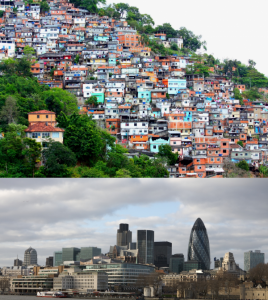
This photograph could be described in this way in the alternative text description:
Figure 6.3.1 shows a photo of densely packed buildings on a hillside and a photo of an architecturally diverse city skyline.
How to Add Alternative Text Descriptions
When Editing Images in Pressbooks, provide alternative text descriptions in the box titled “Alternative Text.”
These descriptions should be no longer than 125 characters, including punctuation and spaces, to work properly with screen readers. Remember: if your description is longer, consider adding the bulk of the description to the surrounding text or including a link to a long description in the appendix.
How to Add Long Image Descriptions
- Create an appendix entitled, “Appendix [X]: Figure Descriptions.”
- In the appendix, list all long image descriptions according to your numbering system, in the order they appear in your textbook.
- Create and insert your long image description, followed by a link to the image within the chapter. See Linking Material for steps on creating links between chapters.
- In the image caption, ensure that you include a link to the long description in the appendix.
- Be sure to include a brief description in the image’s “Alternative Text” field, within the image editor, that states that there is a long image description available.
Example See Figure 2.1 and Figure 2.1’s long image description in Appendix C: Figure Descriptions from Research Methods: Exploring the Social World in Canadian Context by Diane Symbaluk and Robyn Hall, licensed under a CC-BY-NC 4.0 license
Let us help! Adding long image descriptions in Pressbooks can be complicated. Email digitalscholarship@macewan.ca for support.
Using Colour
Consider what your images would look like if they only displayed in black and white. Would any necessary context or content be lost if the colour was “turned off”? Images should not rely on colour to convey information; if the point you are making depends on colour to be understood, you may need to edit your image or formatting so that concepts presented are not lost to those who are colour blind or who require high contrast between colours.
Example 1 — not accessible:
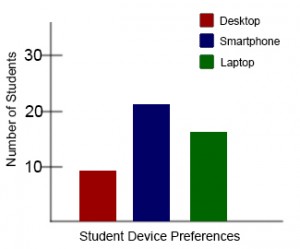
Example 2 — not accessible:
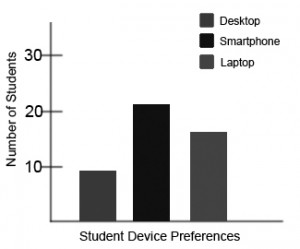
Example 3 — accessible:
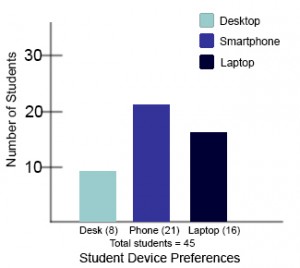
Decorative Images
If your image does not add meaning and is included for decorative or design purposes only, the alternative text description field should be left empty or blank. Assistive technologies will detect the image, and by leaving the alternative text description blank, you will signal to the student that there isn’t any contextual content embedded. Including alternative text descriptions for decorative images “simply slows the process down with no benefit because the screen-reading software vocalizes the content of the [alternative text description], whether that alternative text adds value or not” (webAccess, 2012).
References
W3C. (2008). Web content accessibility guidelines (WCAG) 2.0. http://www.w3.org/TR/WCAG20
webAccess (2012). Top ten tips for making your website accessible. http://webaccess.berkeley.edu/developer-information/top-ten-tips (archived version)
WebAIM. (2014). Alt text blunders. http://webaim.org/articles/gonewild